Torque gets you off the line. Power keeps you accelerating. Gearing decides the trade. Tune the rig below, then race a petrol rival to the flag.
Drag the final-drive ratio. Watch the torque curve trade launch force against top speed.
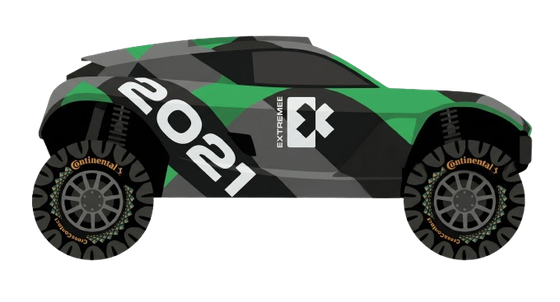
The real ODYSSEY 21 is geared to hit 0–100 km/h in 4.5 s: even on a 130% gradient. Can your setup beat it?
Same peak power. The EV delivers max torque from 0 rpm; the petrol car has to climb its rev range and shift gears.
Torque (Nm) is rotational force: what shoves the car forward. Power (kW) is how fast that force can be delivered as speed rises. Power = torque × rotational speed, which is why the force curve collapses as the car goes faster: the motor runs out of watts, not twist.
A petrol engine makes almost no torque at low revs: it needs to scream to ~7,000 rpm and shift through gears. An electric motor delivers maximum torque from a standstill with a single-speed gearbox. That's the entire launch duel in one sentence.
A taller ratio multiplies torque at the wheels: brutal launches, lower top speed. A shorter ratio does the opposite. Race engineers re-gear for every terrain: deep sand wants force, a frozen lakebed wants speed. There is no perfect answer, only the right compromise.
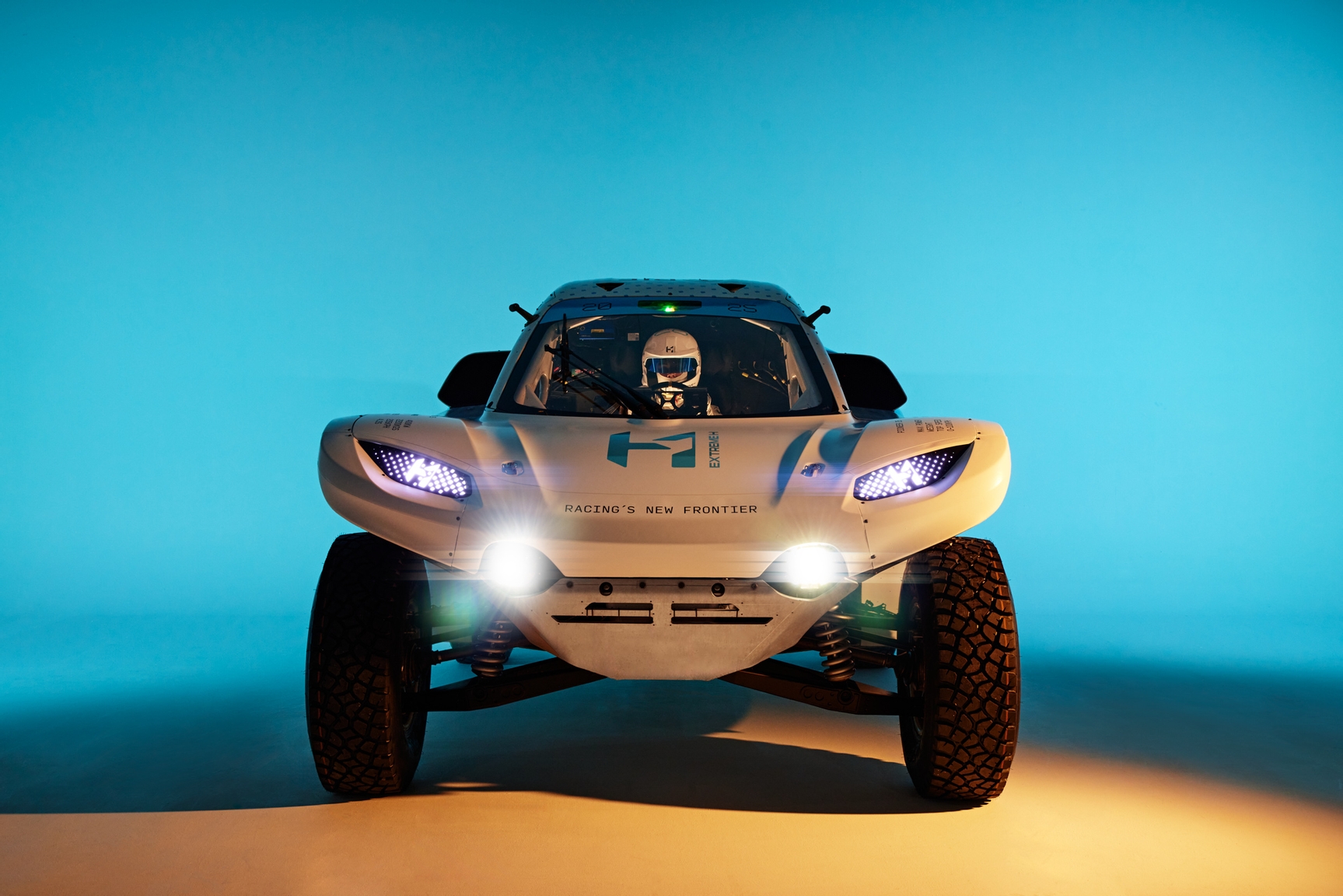
The next-generation Pioneer 25 keeps the dual 200 kW eMotors you just mastered, but feeds the battery from a 75 kW hydrogen fuel cell storing 2 kg of H2 at 400 bar. The motor physics in this course doesn't change. The energy source does.